

Helping Children Build Confidence Through Understanding
Building confidence in children is rarely about dramatic breakthroughs or overnight success. More often, confidence grows quietly through small successes, regular encouragement and gradually developing understanding.
One of the biggest misconceptions I come across is that confident children are simply born that way. In my experience, confidence has very little to do with natural ability and much more to do with a child’s experiences. Children become confident when they begin to realise that they can overcome challenges, solve problems and make progress over time.
Parents regularly tell me that their child lacks confidence. More often than not, I find it has very little to do with ability. Children can become disappointed by one difficult question, frustrated by one low score or convinced they are “bad at maths” after making a few mistakes. They naturally focus on the questions they could not answer rather than the many they answered correctly.
Confidence Comes from Understanding

There is sometimes a misconception that confidence arrives before success. I have found that it is usually the other way around. Children become more confident because they understand something better than they did previously.
A child who struggled with long multiplication three months ago but can now confidently explain each step has made enormous progress. The same can be said of comprehension, problem-solving or grammar. These improvements often happen gradually, which means children do not always recognise just how far they have come.
That is one of the reasons I regularly revisit previous topics in my lessons. Nothing builds confidence quite like realising that something which once felt difficult now feels straightforward. Those moments are often far more powerful than simply receiving a good score in a test.
Good Habits Build Confidence

Over the years, I have noticed that confident learners tend to develop similar habits. They read questions carefully, show their working out clearly and are willing to have a go even when they are unsure. They understand that getting something wrong is not a reflection of their ability, but simply another opportunity to learn.
Children sometimes assume that the strongest pupils never make mistakes. The reality is quite the opposite. The children who make the greatest progress are often those who are willing to make mistakes, ask questions and keep trying when they do not immediately find the answer.
I would much rather teach a child who is willing to attempt a difficult question than one who leaves it blank because they are afraid of getting it wrong.
Progress Looks Different for Every Child

One thing I always encourage parents to avoid is comparing their child with others. Every child develops at a different pace and brings different strengths to the classroom. Some children are naturally confident speakers, while others quietly develop confidence over time. Some grasp mathematical concepts quickly but take longer to develop their writing skills.
Confidence is rarely built in dramatic moments. More often, it is built quietly through regular practice, encouragement and the gradual development of understanding. A child answering one more question correctly than they did last month is progress worth celebrating.
Building confidence in children also means recognising that progress will look different from one child to the next. Sometimes confidence is putting a hand up to answer a question for the first time. For another child, it might mean attempting a difficult maths problem without immediately asking for help. Those small moments are often worth celebrating just as much as an excellent test score.
Confidence Beyond the Classroom

Building confidence in children extends far beyond schoolwork. Confidence developed in the classroom often influences other areas of a child’s life. Children who feel comfortable making mistakes become more willing to contribute to discussions, share their ideas and challenge themselves when faced with unfamiliar situations.
One of my favourite moments as a teacher is not necessarily when a child achieves full marks, but when they say, “I couldn’t do that a few weeks ago.” Those moments are sometimes easy to overlook, but they are often where the greatest progress has taken place.
Parents can sometimes underestimate the value of encouragement during difficult moments. Praising effort, perseverance and improvement often has a much greater long-term impact than focusing solely on outcomes. Children who learn to view challenges positively are far more likely to approach future learning with confidence.
Small Steps Become Lasting Progress

Confidence is not something that appears overnight. More often, it grows slowly through hundreds of small successes that children themselves may not even notice at the time.
Reading one extra page of a book, solving a problem that seemed impossible a few weeks earlier or finally understanding a topic that once felt confusing are all examples of meaningful progress. Those small moments gradually become something much bigger.
I have always believed that children learn best when they feel comfortable asking questions, making mistakes and celebrating progress, however small it may seem. In many ways, confidence is simply the result of repeatedly experiencing success and recognising that difficult things become easier with practice.
SEAG Mock Examinations
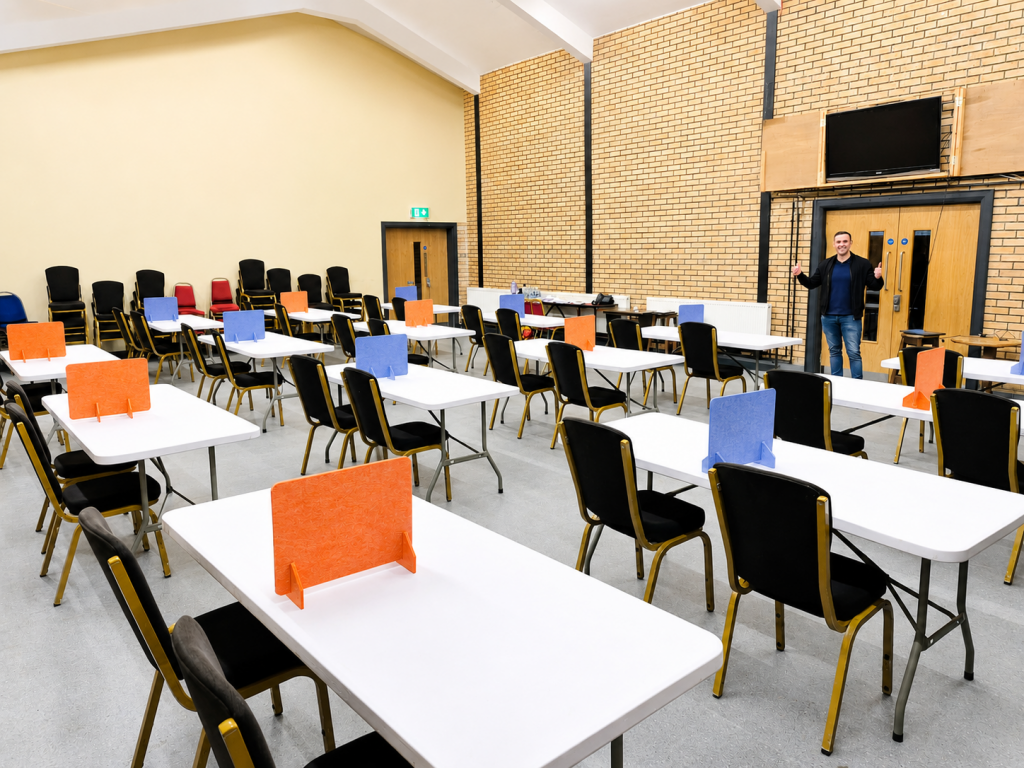
This is one of the reasons I value mock examinations so highly. A mock examination should tell us much more than how many questions a child answered correctly. It should help us understand what they need to do next.
A mock might tell us that timing needs improving, that silly mistakes are creeping in or that a particular topic requires more attention. Equally, it might show just how much progress a child has made over recent months. That information is invaluable while there is still plenty of time before the Transfer Test.
This year’s mock examinations will take place on Saturday 12th September, Saturday 19th September, Saturday 17th October and Saturday 24th October at Glenn John Martin’s GAC, 32 Bar Hill, Newry, BT34 1SZ.
Previous mock dates have sold out and over 60% of places have already been reserved across this year’s examinations. If you would like further information or would like to reserve a place, please feel free to get in touch.
Unlock Your Child’s Potential with Education Support Hub
Since 2019, Education Support Hub has supported children across Northern Ireland in developing confidence and skills in English, maths, phonics and SEAG Transfer Test preparation. I work with pupils from Primary 3 to Year 10 through small-group online lessons, carefully matched by ability and learning targets. This approach creates a focused yet supportive environment where children feel comfortable asking questions and learning from one another.
Parents often tell me they value the calm, structured approach and the emphasis on understanding rather than rushing content. My aim is always to help children feel capable and confident in their learning, not just for tests, but for school and beyond.
If you would like to arrange a no-obligation chat or assessment to discuss your child’s needs, please get in touch using the details below.
Daniel Guiney
Founder, Education Support Hub
07513 286626