

For many children across Northern Ireland, this is their first full week back at school after the summer holidays. New teachers, new classrooms and new routines all take a little time to get used to.
As children settle back into school, parents often ask what they can do at home to give them a little extra support. Reading, spelling and times tables usually spring to mind first, but there is another area that can make a huge difference across a child’s learning: vocabulary.
A strong vocabulary isn’t simply about knowing impressive words. It helps children understand what they read, explain their ideas clearly and make sense of unfamiliar information.
For children preparing for the Transfer Test, SEAG vocabulary is particularly important. A child might be a confident reader but still find comprehension difficult because several words in the passage are unfamiliar.
The good news is that vocabulary is something parents can help develop without adding another pile of homework.
Why Does Vocabulary Matter So Much?

Sometimes I see children who can read a passage aloud beautifully but, when asked what it was about, find it much more difficult.
The problem isn’t necessarily their ability to read the words. They may simply not understand them well enough.
Imagine reading a paragraph containing five or six words whose meanings you don’t know. You might understand the general topic, but important details can easily be missed.
This matters across school, not just in English. Children meet new vocabulary in Maths, Science, Geography, History and almost every other subject.
It is also why reading regularly is so valuable. Books expose children to words and expressions that don’t always come up in everyday conversation.
But simply seeing a word once doesn’t guarantee that a child will understand or remember it. What we do when they encounter that unfamiliar word matters too.
Don’t Give Them the Answer Straight Away

When a child asks, “What does that word mean?”, our natural reaction is usually to tell them.
Sometimes, though, I would hold back for a few seconds.
Ask:
“What do you think it means?”
If they don’t know, look at the sentence together.
What is happening at this point? Are there any words nearby that provide a clue? Does the word sound positive or negative? What meaning would actually make sense in that particular sentence?
Children need to become comfortable meeting words they don’t recognise. There will always be unfamiliar vocabulary, no matter how much they read.
The aim isn’t to teach them every possible word. It is to give them ways of coping when they meet one they haven’t seen before.
Becoming Reading Detectives

One of my favourite vocabulary activities in class is very simple.
I choose an ambitious word and show it to the children completely on its own.
I ask, “What does this mean?”
Sometimes someone knows immediately. Sometimes a child recognises the word but can’t quite explain it. Quite often, I’m met with a few blank faces.
Then I put exactly the same word into a sentence.
Suddenly, we have clues.
We become reading detectives and try to work out the meaning together.
Take the word trudged.
On its own, a child might have no idea what it means.
Now look at it here:
The exhausted runner trudged towards the finish line.
Even if we have never seen trudged before, we can start investigating.
The runner is exhausted. They are heading towards the finish line. Would it make sense for trudged to mean sprinted? Probably not.
From the information surrounding the unfamiliar word, we can make a sensible prediction that the runner is moving slowly and with some difficulty.
Children often surprise themselves when we do this. Thirty seconds earlier, they couldn’t tell me what the word meant. Now they have worked it out themselves.
That is far more valuable than simply giving them a definition.
SEAG Vocabulary and Comprehension

This skill is particularly important when preparing for the Transfer Test.
Comprehension isn’t only about finding information in a passage. Children need to understand what they are reading well enough to make inferences, recognise how a character is feeling, identify the meaning of vocabulary and explain ideas from the text.
One unfamiliar word can occasionally change the meaning of an entire sentence.
If that sentence contains an important clue, misunderstanding it can then affect the child’s answer to a comprehension question.
That is why, when working on SEAG vocabulary, I don’t want children simply memorising lists of complicated words.
Learning new words is useful, of course, but children also need a plan for words they haven’t learned.
When an unfamiliar word appears, encourage them to:
- Read the whole sentence again.
- Look at the words immediately before and after it.
- Think about what is happening in the passage.
- Break the word down if they recognise part of it.
- Decide on a possible meaning.
- Put that meaning back into the sentence and check whether it makes sense.
That last step is particularly useful. A guessed definition might sound reasonable on its own but make absolutely no sense when placed back into the sentence.
How Parents Can Build Vocabulary at Home

Vocabulary practice doesn’t need to involve worksheets every evening.
Ordinary conversation is one of the easiest places to start. Ask your child about their school day, but occasionally go beyond, “How was school?”
Try questions such as:
“What was the most interesting thing you did today?”
“Why did you enjoy it?”
“Describe what happened at break time.”
“What was the most difficult part of your day?”
Questions that require more than a one-word answer encourage children to explain, describe and give opinions.
You can also deliberately use slightly more ambitious vocabulary yourself. You don’t need to simplify every word because you think your child might not know it.
If they stop you and ask what something means, that’s useful. They have just encountered a new word naturally.
Make New Words Stick
Learning the meaning of a word once doesn’t necessarily mean it will become part of a child’s vocabulary.
Repetition helps.
If your child learns the word reluctant, try using it naturally again later:
“You seem very reluctant to get out of bed this morning!”
If they learn enormous, see if they notice something enormous while you’re out.
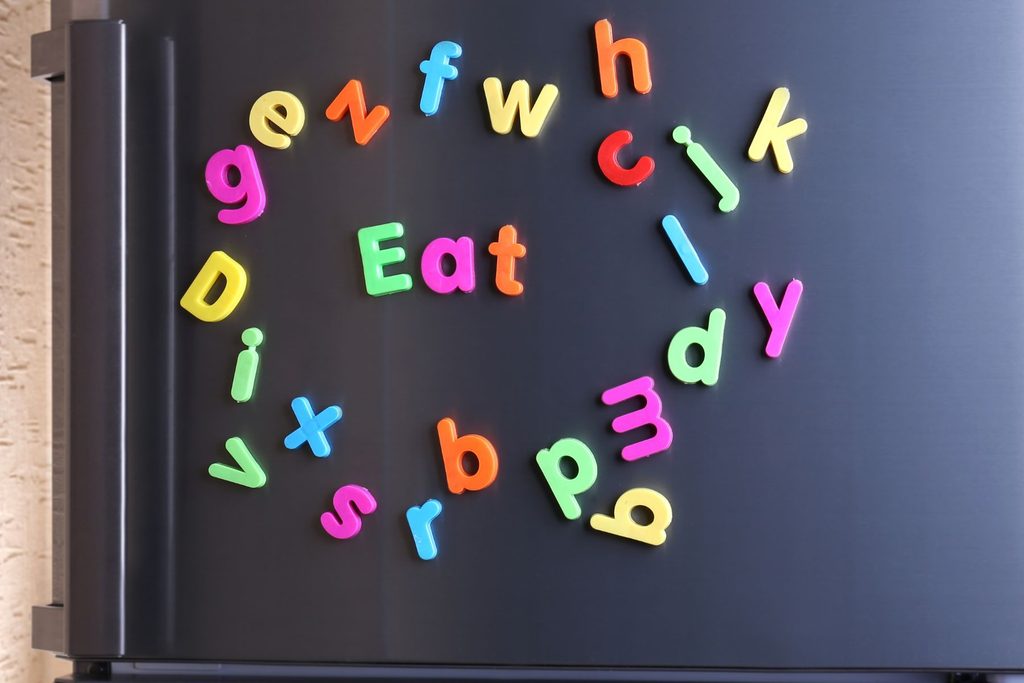
You could also keep a small list of interesting words on the fridge or notice new vocabulary while reading together. Twinkl similarly suggests revisiting new words in conversation and using word games and everyday talk to reinforce vocabulary.
The aim isn’t to test the child every time the word appears. It is simply to give them several opportunities to hear and use it.
Try a Quick Synonym Challenge

Another easy activity is to choose an ordinary word and see how many alternatives your child can think of.
Instead of happy, could we use:
delighted, cheerful, thrilled, pleased, joyful?
Instead of walked:
strolled, wandered, marched, shuffled, crept?
Then talk about whether those words really mean exactly the same thing.
Someone who crept into a room creates a very different picture from someone who marched into it.
This doesn’t only develop vocabulary. It helps children appreciate the choices authors make and can improve their own creative writing too.
Read a Little More Widely

If your child always chooses the same type of book, gently encourage some variety.
Stories are fantastic, but children can also encounter completely different vocabulary through non-fiction, newspapers, magazines, poetry and books about subjects that interest them.
A child fascinated by football might happily read an article about a match. Another might spend half an hour reading facts about space, animals or ancient Egypt without considering it “reading practice” at all.
That still counts.
The more varied the material children read, the more opportunities they have to encounter unfamiliar language.
SEAG Mock Exams
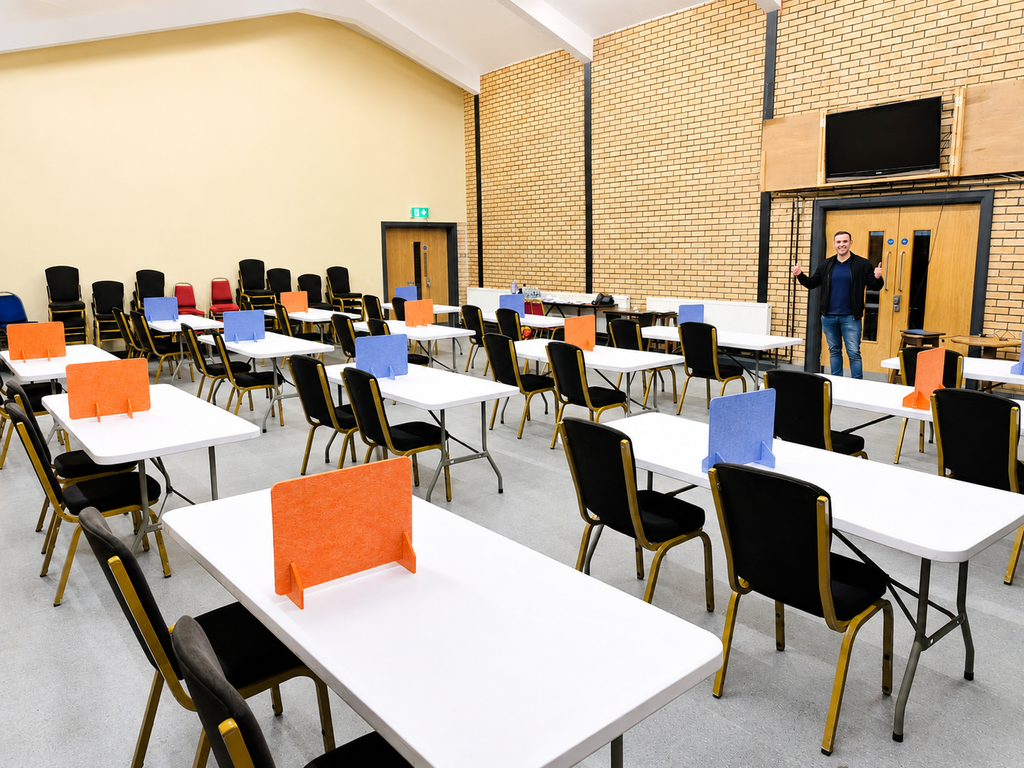
For P7 children preparing for the Transfer Test, I am running SEAG Mock Exams during September and October.
Children complete a full SEAG-style English and Maths paper under timed conditions, giving them experience of what sitting the actual test will feel like. Each mock also includes individual feedback and a follow-up Zoom test walkthrough to identify mistakes and areas needing further attention.
Support from Education Support Hub
At Education Support Hub, I provide online small-group tuition for children from Primary 3 to Year 10, including English, Maths, Phonics and SEAG Transfer Test preparation.
Classes are deliberately kept small so children have plenty of opportunities to answer questions, explain their thinking and work on individual areas for improvement.
Vocabulary and comprehension are skills we return to regularly. I want children to know more words, but just as importantly, I want them to have the confidence to tackle a word they have never seen before.
As children settle back into school, vocabulary doesn’t need to become another thing for parents to worry about.
Read together. Talk together. Notice interesting words.
And the next time your child asks, “What does that mean?”, try resisting the temptation to answer immediately.
Give them the sentence and let them become the detective.